Callback




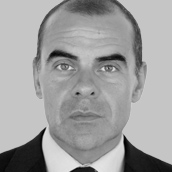
Prof. Dr. Khalid Koser is Founding Executive Director at Global Community Engagement and Resilience Fund (GCERF) and Professor of Conflict, Peace and Security at Maastricht University.
The Global Investment Risk and Resilience Index provides unique insight into how exposure to shocks, and the capacity to absorb them, are unevenly distributed worldwide.
What the data shows — and what policy too often overlooks — is that resilience and risk are two sides of the same coin.
There is a striking correlation in the index: countries with higher risk scores (where lower is better) also tend to have lower resilience scores. These are predominantly low-income nations, where a major development challenge is attracting overseas investment to drive employment, growth, and better integration into the global economy. Yet the same countries that most urgently need investment to diversify and grow are often the least able to attract it. Investors tend to shy away from high-risk environments owing to insecurity, volatility, weak governance, and fragile institutions. For investors, social stability and trust are as critical as infrastructure.
The best way to reduce these risks is to build resilience. Building resilience is therefore not just a social priority — it is a key strategy for mitigating investment risk. But this creates a self-reinforcing trap: without investment, countries cannot build resilience; without resilience, they cannot attract investment.
This paradox is especially stark in the context of the green transition, where demand for new energy and digital supply chains will increasingly hinge on reliable, stable environments. A telling example comes from the extractive industries. Many of the world’s rare earth minerals — critical for both the green and digital transitions — are found in regions where investment risks are high, such as parts of sub-Saharan Africa. Security is often the dominant risk — as demonstrated by the suspension of LNG extraction and processing in northern Mozambique — highlighting how instability directly undermines economic potential.

A decade of experience from the Global Community Engagement and Resilience Fund shows that resilience is most effectively and efficiently built from the ground up. In some of the world’s most fragile contexts, we have invested in promoting social cohesion, supporting equitable access to opportunity, leveraging community agency, and fostering a sense of purpose — significantly reducing the risk of radicalization and recruitment to violent extremism. These investments have, in turn, built trust between communities and local authorities, positioning civil society as a partner to national governments and driving legitimacy, accountability, and good governance. The same dynamics apply to conflict prevention, climate adaptation, and public health resilience.
This creates a virtuous circle. Countries at high risk have every incentive to lower that risk — both to protect their citizens and to attract investment. The most cost-effective way to do so is to build resilience, particularly at the community and societal levels. Over time, focusing on the ‘resilience’ column of the index will have a positive upstream effect on the ‘risk’ column.
The Global Investment Risk and Resilience Index therefore provides more than a diagnostic: it offers a roadmap. It links investment and development priorities to measures that strengthen social and institutional resilience. It is a call for cross-sector collaboration — where policymakers, investors, and communities can work together to help shift countries from a cycle of fragility to one of confidence and growth. It is a reminder that risk reduction begins not in the boardroom or the barracks, but in the resilience of communities themselves — and that investors can either entrench fragility or catalyze development by promoting community engagement.
Ultimately, the Global Investment Risk and Resilience Index reminds us that resilience is not a by-product of prosperity, but its precondition.



As the global leader in residence and citizenship planning, Henley & Partners is best placed to advise you and your family. Contact us for a free consultation.