Callback




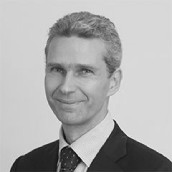
Dr. Christian H. Kaelin, TEP, FIMC is Chairman at Henley & Partners.
The concept of Free Global Cities — autonomous jurisdictions within national borders where displaced individuals can immediately work, start businesses, and rebuild their lives — represents a radical rethinking of governance and resilience in an era defined by displacement, climate disruption, and systemic risk. Autonomous Free Global Cities can complement national resilience by creating safe, prosperous jurisdictions that transform displacement into opportunity.
Political instability and armed conflicts in various regions force millions to flee their homes in search of safety and refuge each year. The latest UN Refugee Agency (UNHCR) data reveals that over 123 million individuals worldwide are displaced from their homes — this figure has doubled over the past decade. More than 70% of refugees are trying to escape from war, with the majority originating from Venezuela, Syria, Afghanistan, Ukraine, and South Sudan.
The climate crisis is another driver. A recent World Meteorological Organization report found an 86% chance that global average temperatures will exceed 1.5° C above pre-industrial levels in the next five years — a critical threshold scientists warn will sharply increase the risks of extreme weather, ecosystem disruption, and social instability. This is one of the biggest challenges of our time, with repercussions for almost every aspect of our lives, society, and environment, as rising temperatures lead to more frequent, more severe natural disasters, which render certain places uninhabitable and displace entire communities.

In the face of significant challenges, historical approaches to addressing the refugee and migration crisis have proven inadequate. Many refugees live in appalling conditions in poorly managed camps for years, or even decades. If host nations cannot accommodate them, the solution is often not repatriation. For many, returning to their countries of origin is not viable, especially if they are fleeing famine, war, or an uninhabitable environment. The rising tide of anti-immigration sentiment and xenophobia is further thwarting efforts to find sustainable solutions, relegating refugees to the margins of society, and perpetuating cycles of exclusion and marginalization.
While countries such as Canada and New Zealand have to some extent managed the delicate process of integration effectively, in today’s volatile political climate there is a growing resistance to local integration. This closed-door policy is increasingly evident even in countries that historically were founded on the backs of migrants. There is a pressing need for new governance solutions that link humanitarian imperatives with economic opportunity.
These converging crises underscore the urgent need for a new governance paradigm — one that transforms displacement into opportunity and integrates humanitarian imperatives with economic vitality.
The defining features of Free Global Cities are open residence rights prioritizing displaced populations, the right to establish businesses and work from day one, and strong property rights.
Resilience is not only about economic and institutional strength, but also about adaptive governance at the city level. Just as national resilience metrics expose systemic strengths and weaknesses, Free Global Cities serve as living microcosms of resilience-building capacity — agile jurisdictions that harness human potential while alleviating pressure on host governments. The potential engines of growth we envisage could generate tax revenue for host countries, deliver returns for investors, and create vibrant, self-sustaining communities, with benefits for all stakeholders. Importantly, we believe that such cities could mitigate the worst migration crisis in history, which the world will be experiencing in the coming decades.
Free Global Cities challenge traditional binaries of aid versus autonomy and integration versus assimilation. They recognize refugees not as burdens but as catalysts — individuals whose skills, creativity, and perspectives can contribute to local economies and strengthen social cohesion. They also serve as policy laboratories, testing innovative approaches such as climate-resilient infrastructure, inclusive labor markets, and adaptive governance — smaller, more agile systems that demonstrate resilience in action.
For displaced populations, Free Global Cities embody dignity, agency, and opportunity rather than dependency. For investors, they present new frontiers for capital allocation aligned with impact investing and ESG principles. For policymakers, they offer a model for strengthening national resilience through decentralized, city-led approaches. For all stakeholders and host nations alike, these city-scale models of resilience present a rare alignment of humanitarian purpose and long-term economic return.
Resilience is also about cities. Free Global Cities represent the next frontier — bridging humanitarian need with economic opportunity, innovation, and inclusive growth. As global risks increase, the world must invest not only in stronger nations, but also in freer, more resilient cities that embody the best of human adaptability and cooperation



As the global leader in residence and citizenship planning, Henley & Partners is best placed to advise you and your family. Contact us for a free consultation.