Callback




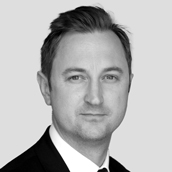
David K. Young is President, Committee for Economic Development at The Conference Board.
The current geopolitical environment is not simply more volatile — it is fundamentally different in character. What we are witnessing is a structural shift from a world defined by relatively stable assumptions to one defined by continuous repricing of risk in real time. The recent Middle East shock, layered onto ongoing conflict in Europe and broader geoeconomic fragmentation, has accelerated this transition, forcing both investors and policymakers to reassess long-held frameworks for decision-making.
From my vantage point, working closely with CEOs and multinational leaders, one point is unequivocal: uncertainty is no longer episodic; it is persistent. This has profound implications. Static models of risk assessment — built on historical relationships, predictable alliances, and gradual change — are no longer sufficient. Instead, decision-making systems must evolve toward dynamic, real-time evaluation, where assumptions are continuously tested against rapidly shifting geopolitical and market signals.
This shift is clearly reflected in the latest Global Investment Risk and Resilience Index findings. What stands out is not merely an increase in global risk, but a significant re-ranking of where that risk resides. Markets are repricing sovereign exposure at speed, often ahead of underlying fundamentals, creating a more fragmented and less intuitive global landscape. Emerging markets such as India, Mexico, and Türkiye are gaining relative ground, while others facing geopolitical exposure or structural fragility are falling sharply. This is a relative story — not all boats are sinking, but they are moving in very different directions.
Investors are responding accordingly, and importantly, in real time. We are seeing not just capital reallocation, but a broader reconfiguration of geographic exposure — including personal mobility decisions. Demand for residence and citizenship programs has surged across nationalities and regions, with applications made through Henley & Partners spanning over 70 nationalities and more than 40 programs in early 2026 alone. The fact that US nationals account for the largest single cohort of applications is particularly telling. Even investors from traditionally stable economies are actively hedging geopolitical risk.
This brings into sharper focus an often underappreciated dimension of investment migration: trust. While economic growth and security remain foundational, trust in institutions, governance, and long-term policy direction is increasingly central to decision-making. In my conversations with business leaders, trust has emerged as a defining factor — not only in where to invest capital, but where to anchor families, educate children, and preserve generational wealth.

Safe havens such as Switzerland, the Nordic economies, and Singapore continue to rank highly, reinforcing the enduring value of stability and institutional strength. However, the concept of a ‘safe haven’ itself is evolving. It is no longer about absolute safety, but relative resilience in a fluid environment. At the same time, diversification strategies are becoming more sophisticated. Investors are no longer choosing a single jurisdiction but constructing ‘sovereign portfolios’ — spreading risk across multiple countries to enhance flexibility and optionality.
The behavioral data underscores this shift. Surging demand for programs in New Zealand (+165%) and Southern Europe, alongside declining interest in previously favored jurisdictions like the UAE, reflects how quickly perceptions of risk and opportunity can change. These are not gradual reallocations — they are decisive, strategic moves.
Ultimately, investment migration today sits at the intersection of geopolitics, economics, and personal strategy. As global risk becomes more fragmented and less predictable, the ability to adapt — to reassess assumptions in real time and act decisively — will define both investor success and national competitiveness. Countries, like companies, must now think in terms of resilience, trust, and adaptability. Those that can provide a credible, stable, and trusted environment will continue to attract global capital and talent, even in an era where uncertainty is the only constant.



As the global leader in residence and citizenship planning, Henley & Partners is best placed to advise you and your family. Contact us for a free consultation.