Callback




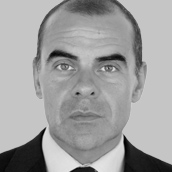
Prof. Dr. Khalid Koser is Executive Director, at the Global Community Engagement and Resilience Fund and a Member of the Governing Board at the Andan Foundation.
This short contribution is situated at the intersection of three global contradictions. First, despite growing awareness and assistance, the global refugee crisis is accelerating. Second, asylum seekers and refugees represent one end of a widening migration rights spectrum, with highly skilled migrants at the other. Third, although migration is at the top of political agendas, governments have fewer levers than ever before. Free global cities — self-governed urban hubs designed to host displaced populations — may offer a new way to resolve these contradictions, where private investment and public purpose can come together to shape resilient, forward-looking communities.
According to the UN Refugee Agency, by the end of 2024, over 117 million people were displaced from their homes by persecution, conflict, and violence. This includes almost 36.4 million people forced out of their countries as refugees, significantly from Venezuela, Syria, Ukraine, Afghanistan, and South Sudan, and around 73.5 million internally displaced persons. The total represents about one in every 70 people on earth, a number which has doubled over the last decade. One reason for this escalation in displaced people is that the current era is widely recognized as one of increasing conflict: alongside enduring wars in Gaza, Syria, and Ukraine, conflict is intensifying in the Democratic Republic of Congo, Myanmar, and Sudan. A second reason is that climate change is exacerbating conflict and will soon become a significant and distinct driver for displacement. Additionally, durable solutions are out of reach for most refugees: most states are unwilling to integrate refugees permanently, the largest resettlement program for refugees in the USA has been suspended, and most refugees are reluctant to return home. Free global cities have been proposed as an alternative solution for refugees — autonomous, sub-national entities, where individuals and families who have been forced to flee their homes are welcomed into a safe environment where they can thrive, rather than merely survive.

Most asylum seekers and refugees, along with irregular (or undocumented) migrants, have very limited access to rights and resources. This contrasts with highly skilled migrants, who are in growing demand as their innovation and expertise have a disproportionate impact on economic growth. Often their movement is facilitated by selective visa systems or inter-corporate transfers, and they are offered competitive rights and remuneration as demand currently outstrips their supply.
Today’s international students are tomorrow’s highly skilled migrants. They are also increasingly in demand (restricting their movements is an act of economic self-harm). Some more successful migrants (and refugees) support the less fortunate, through financial contributions, sponsorship and mentoring, and volunteer work. Contributing resources, expertise, or entrepreneurship to free global cities is a more systemic way to reinforce this virtuous circle.
Official development assistance is shrinking, with the closure of the world’s largest development agency, USAID, signaling a new development paradigm based more on national interests than on any moral imperative. Europe has been unable to fill the gap, and the development intentions of ‘new’ donors such as China or the Gulf states remain unclear. Many international organizations are reducing overheads by restructuring, while at the same time turning more to the private sector as a source of funding to fill shortfalls in their humanitarian and development work, including for refugees. However, many have not yet adjusted to the ‘return on investment’ logic of the private sector in general, since businesses are generally unable or unwilling simply to make charitable contributions. Participating in free global cities offers companies a different proposition: an opportunity to contribute hardware and expertise, not just financing; and to expand to new frontier markets, with access to a resourceful labor supply, while also fulfilling corporate social responsibilities.
Free global cities are moving surprisingly swiftly beyond the concept phase. The challenges are significant but not insurmountable, and of course, these new urban hubs may bring political divides, economic disparities, and social issues. They are not a panacea, but they represent a genuinely innovative effort to find a new solution for displaced persons, foster a virtuous circle between the haves and the have-nots of migration, and drive private innovation for public resilience.



As the global leader in residence and citizenship planning, Henley & Partners is best placed to advise you and your family. Contact us for a free consultation.