Callback





Prof. Mehari Taddele Maru is a part-time professor at the School of Transnational Governance and the Migration Policy Centre at the European University Institute, Florence, and an Adjunct Professor at Johns Hopkins University School of Advanced International Studies, Bologna, and Luiss University, Rome.
As the European Union (EU) proclaims a renewed Africa–Europe partnership, its new visa regime tells a starkly different story. Demand for Schengen visas from African applicants continues to rise, mainly driven by work, education, and family ties, yet access is narrowing at an alarming pace.
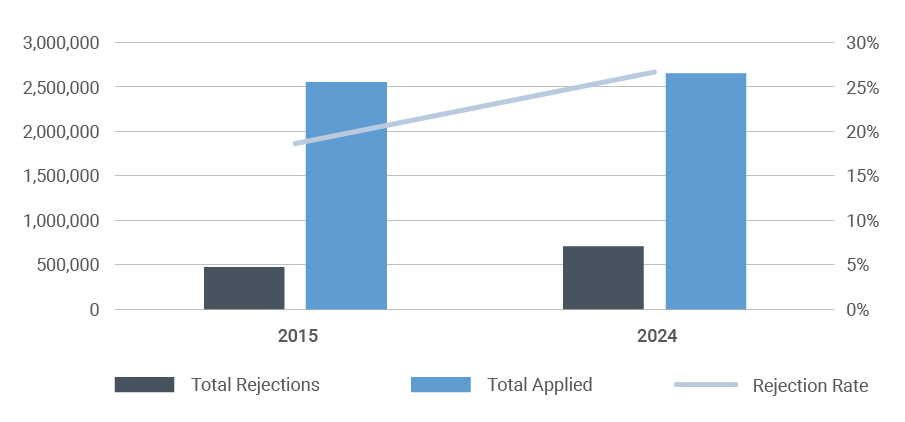
Between 2015 and 2024, Schengen visa applications increased by only about 100,000, but rejection rates surged from 18.6% to 26.6%, exposing a system that is growing more exclusionary even as mobility pressures intensify. Recent Schengen policy changes rolled out between 2024 and 2025 — including sharp fee hikes, punitive sanctions frameworks, expanded digital surveillance, and prolonged processing times — are poised to push rejection rates even higher. These reforms do not merely regulate movement; they entrench a hierarchy of global mobility that privileges wealthy nations while systematically disadvantaging African travelers, amounting to a form of conditional racial discrimination that undermines the EU’s stated commitments to equity, partnership, and shared prosperity.
Rather than responding to legitimate mobility needs with transparency and fairness, the EU’s evolving Schengen framework increasingly treats African movement as a risk to be contained. By raising the financial and administrative costs of applying and tightening enforcement through surveillance and sanctions, the regime shifts the burden onto African applicants while insulating European states from accountability. The result is not simply higher barriers to entry, but a policy architecture that normalizes inequitable access to travel and undermines the credibility of the EU’s partnership narrative.
Chart 1. Schengen Visa (C) Rejection Rate, 2015 Versus 2024
Source: Compiled by Author, Eurostat 2025
This paper advances three central arguments:
First, these recent EU policy reforms will further elevate the already disproportionate rejection rate of African Schengen visa applicants and reinforce the barriers that systematically disadvantage African travelers.
Second, these policies, ostensibly designed to regulate temporary mobility for tourism, business, and education, have evolved into a sophisticated gatekeeping apparatus that restricts access from the Global South — particularly Africa.
Third, these policy shifts represent systematic discrimination that cannot be explained by economic factors alone, as discussed in previous articles. Visa rejection rates for African applicants reveal what scholars identify as ‘conditional racial discrimination’ in international visa policymaking, rooted in domestic identity politics, anxieties due to demographic shifts, and geopolitical power dynamics.
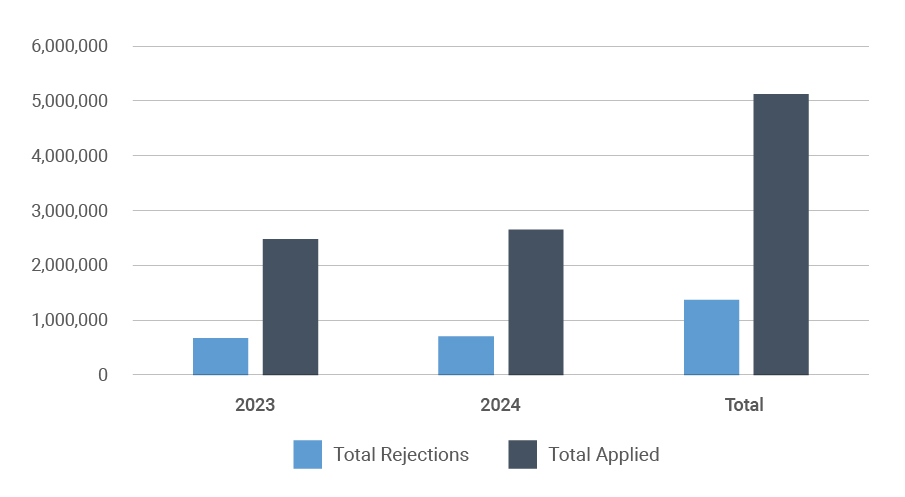
Chart 2. Schengen Visa (C) Rejection for African Applicants
Source: Compiled by Author, Eurostat 2025
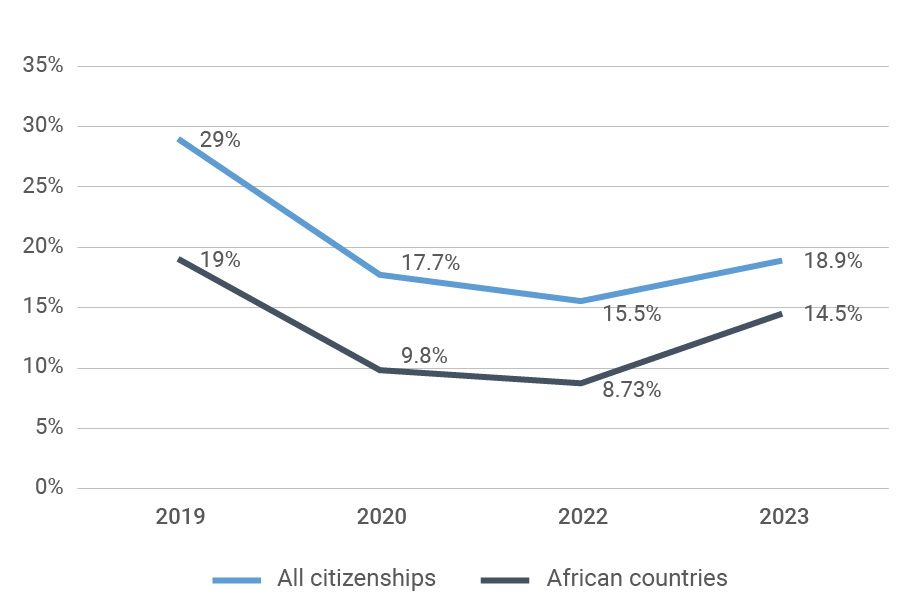
The EU has also implemented visa sanctions, targeting countries deemed ‘uncooperative’ on readmitting irregular migrants. The EU’s new policy imposes punitive fees of EUR 135 (50% increase) or EUR 180 (100% increase), alongside extended (up to 60 days) processing times. Shown in Chart 3, the return rate of African irregular migrants in Europe is the lowest, compared to the global return rate. As a result, several African countries face sanctions, whereby the EU suspends elements of EU law for Schengen visa applicants. These include The Gambia and Senegal (41.2% rejection rate), Ghana (47.5% rejection rate), Mali (over 40% rejection rate), and Ethiopia (35% rejection rate).
Chart 3. Return Rates: Africa Versus All Citizens
Source: Compiled by Author, Eurostat 2024
Standard visa processing takes 15 calendar days, but extended processing under restrictive measures can take 30–45 days for applications that require additional scrutiny. For countries under sanctions, processing extends to 60 days. These delays create significant barriers for business travelers, result in missed conferences and academic collaborations, and make time-sensitive travel nearly impossible.
The EU visa sanctions policy creates a vicious cycle. African countries with higher rejection rates often have elevated numbers of irregular migrants and overstayers, frequently driven by fear of being unable to return if they leave legally. These same countries then face visa sanctions, which further increase costs and processing times, potentially contributing to even higher rejection rates. The punitive measures thus compound the very problem they ostensibly address, while systematically disadvantaging legal mobility, academics, professionals, and businesspeople, who bear the financial costs of their governments' lack of cooperation on migration control.

Since October 2025, the Entry/Exit System (EES) has registered all non-EU nationals entering the Schengen Area through collecting biometric data (facial images and fingerprints) and tracking entry/exit dates. While framed as a security measure, the EES creates surveillance layers that disproportionately affect travelers from regions already subject to heightened scrutiny. The system enables discriminatory profiling based on nationality, has caused longer border crossing times, particularly for African travelers, and reinforces existing prejudices about overstay intentions, despite evidence that irregular stay rates alone do not explain high rejection rates.
Recent policy changes do not merely cause administrative inconvenience, but impose a structural barrier, constraining economic opportunity, academic collaboration and cross-cultural understanding for an entire continent.
As the mobility gap widens, the economic, educational, healthcare, and cultural costs for African nations and individuals will only increase, further entrenching the global hierarchy of movement. These policies contradict the EU's stated commitment to strengthening Africa–Europe partnerships and expanding legal migration pathways.
To address discriminatory visa practices, the EU must replace subjective assessments with objective criteria, eliminate population-wide sanctions, and establish transparent review mechanisms with detailed rejection justifications. Only through comprehensive reform can the EU align its practices with its stated commitments to an Africa–Europe partnership and dismantle the ‘conditional racial discrimination’ and its consequences of a global mobility hierarchy that privileges wealthy nations while excluding the Global South.



As the global leader in residence and citizenship planning, Henley & Partners is best placed to advise you and your family. Contact us for a free consultation.