Callback





Thomas Scott is Group Head of Strategic Partnerships, Head of the Caribbean and a member of the Executive Committee at Henley & Partners.
The modern citizenship by investment sector traces its origins to St. Kitts and Nevis, which launched the world’s first program in 1984. What began as an innovative policy initiative in a small Caribbean federation has since evolved into a global phenomenon, with the Caribbean programs remaining the most established and enduring examples of the model. More than four decades on, the Caribbean programs have evolved alongside the families they serve, maturing from a straightforward route to a travel document into something considerably more substantial. Today, the region’s five established programs — in Antigua and Barbuda, Grenada, St. Kitts and Nevis, and St. Lucia — collectively represent the most mature segment of the global investment migration market.
The clearest evidence of how far these programs have come is the regional regulatory architecture now taking shape. The Eastern Caribbean Citizenship by Investment Regulatory Authority, agreed by the participating states in 2025 and expected to become operational following its establishment in Grenada, is intended to introduce binding regional standards covering due diligence, agent licensing, biometric data collection, and residence requirements. Rather than diminishing the programs, this oversight protects their long-term credibility and the value of the citizenship they confer, particularly against the periodic scrutiny that comes from the European Union and others.
Developed through two years of consultation with the USA, the UK, and the European Commission, it introduces a regional minimum investment threshold of USD 200,000 and commits revenues to infrastructure, climate resilience, and social development across the region.
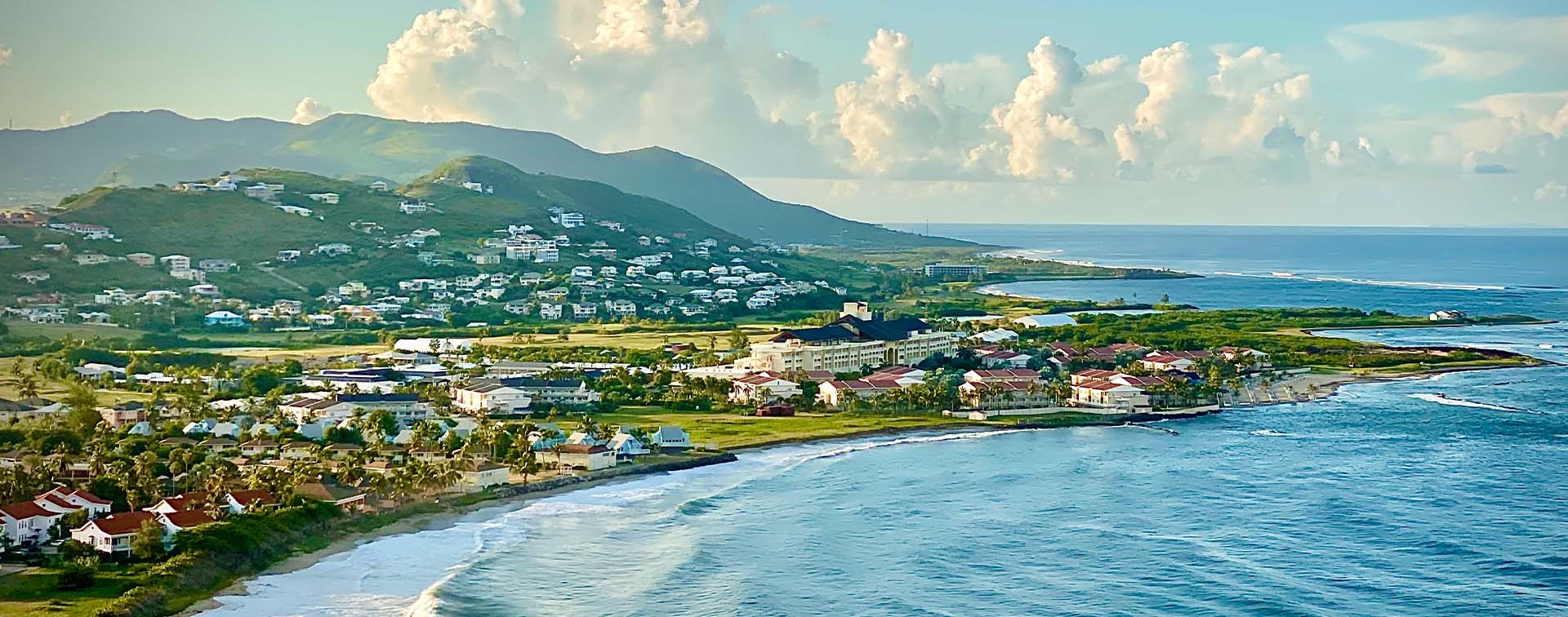
Mobility is the most visible benefit of a second citizenship, and a Caribbean citizenship offers a great deal of it. But it is the standing beneath the travel document that gives these programs their lasting worth. What a family acquires is a permanent, heritable place in a stable country: the right to live there, educate children there, hold and pass on assets there, and build a genuine connection to it across generations.
This matters more as the world grows less predictable. Residence permits are revocable and tax regimes are rewritten, but citizenship, once granted, belongs to the family for good. That permanence is what globally mobile families are really investing in, and it is what the Caribbean governments and advisors now build their programs around: credibility, the caliber of the families they admit, what they contribute, and the relationship between a country and its new citizens. The entrepreneurs, investors, and professionals these programs increasingly seek, the founders, developers, doctors, and philanthropists among them, are individuals who will add something to the region, not simply pass through it.
The Caribbean programs that exist today bear little resemblance to those of the 1980s. The St. Kitts and Nevis Citizenship by Investment Program operated quietly through its first two decades until 2006, when Henley & Partners, under Dr. Christian H. Kaelin, was mandated by the government to restructure and internationalize it. The result, with its dedicated Citizenship by Investment Unit, formal due diligence framework, and licensed agent network, became the operating template the rest of the region adopted. The firm went on to design the Antigua and Barbuda Citizenship by Investment Program from inception under a government mandate in 2012 and was later mandated to revitalize the Grenada Citizenship by Investment Program in 2016.
Each iteration raised the standard. Due diligence deepened, applicant scrutiny tightened, and processing moved onto secure digital infrastructure. The trajectory has been one of steady professionalization, and it continues today.
St. Kitts and Nevis remains the benchmark of the category. Its program is the longest running and consistently ranks at or near the top of independent assessments on due diligence and processing integrity. For families whose priority is the most established and widely recognized Caribbean citizenship, it continues to set the standard.
Antigua and Barbuda has become the leading destination for real estate-linked citizenship, with developments in Jolly Harbour and elsewhere combining qualifying investment with genuine lifestyle value and a tangible asset that can anchor a family’s long-term connection to the country. These projects are increasingly judged by what they contribute on the ground, in tourism, housing, infrastructure, and local employment, rather than by their value as a qualifying transaction alone. As a Commonwealth member it offers its citizens certain privileges in the UK, and its program has generous family provisions, extending to siblings alongside children, parents, and grandparents within a single application.
Grenada offers families a distinctive strategic position. It is the only Caribbean nation holding an E-2 Investor Visa Treaty with the USA, and its citizenship pairs unusually well with other sovereign holdings. A family combining Grenadian citizenship with an EU residence pathway, for example, can build standing on both sides of the Atlantic over time, educating children across Europe at domestic rates while retaining a permanent, heritable nationality in a stable, tax-neutral jurisdiction underneath. This is the kind of long-horizon structuring that distinguishes considered planning from a one-off acquisition.
Dominica and St. Lucia have also established themselves as important components of the Caribbean citizenship by investment landscape, each offering well-regarded programs with their own investment options and strategic advantages.
The deeper value of any of these citizenships is rarely captured at the moment it is granted. It emerges over years, through how the position interacts with a family’s tax residence, business structure, education plans, and estate framework. The families who treat a second citizenship as a living part of their long-term planning, reviewed and adjusted as regulations and circumstances change, consistently realize far more from it than those who treat acquisition as the end of the matter.
What began in St. Kitts and Nevis in 1984 as a novel policy experiment has evolved into the world’s most established citizenship by investment ecosystem. While the sector continues to adapt to changing regulatory expectations and geopolitical realities, the Caribbean programs remain uniquely positioned to provide long-term stability, international optionality, and generational continuity for globally mobile families.



As the global leader in residence and citizenship planning, Henley & Partners is best placed to advise you and your family. Contact us for a free consultation.